


The Future of Campus Success
Introduction
AI, analytics, and assessment are transforming higher education, revealing more intelligent methods to enhance learning, simplify operations, and assist each student. With mounting pressure to demonstrate outcomes and increase student retention, new tools are required to more effectively aid academic faculty and educators. The book, AI, Analytics, and Assessment in Higher Education (ISBN: 9798337370576), underscores the expanding influence of AI and analytics on updating assessment practices and informing more strategic decision-making in higher education. As the editor of this book, Dr. Hany Zaky provides exclusive insights into his professional experience and the mission driving his publication in the following Q&A.
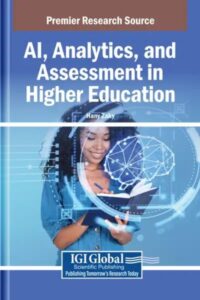
Featured Publication
AI, Analytics, and Assessment in Higher Education
by Prof. Hany Zaky (Eastern International College, USA)
- Covers Topics such as ChatGPT, Curriculum Development, and Data Analysis
- Edited by an active member of several Adult Education TESOL and Composition studies organizations
- Ideal for Educators, Engineers, Academicians, Researchers, and More
Behind the publication
What is your professional background that gives you the knowledge needed to lead this publication?
Dr. Hany Zaky: As the Director of Assessment and Institutional Effectiveness at Eastern International College, my work is committed to learner-centered, outcomes-based education grounded in data-informed decisions. I hold an Ed.D. in Curriculum and Instruction from Indiana University of Pennsylvania and serve as a peer reviewer and Accreditation Liaison Officer for the Middle States Commission on Higher Education (MSCHE). My scholarly focus includes educational technology innovation, culturally responsive pedagogy, and assessment methodologies. In my role as Interim Editor-in-Chief at IGI Global Scientific Publishing, I foster academic dialogue on educational innovation. I am also a frequent international speaker, addressing topics such as AI in instructional design, evaluation frameworks, and quality assurance in higher education.
What inspired you to lead this publication?
Dr. Hany Zaky: As both a practitioner and researcher, I identified a pressing need for coherent guidance to close the divide between rapid technological advancement and institutional preparedness. The ongoing discourse in higher education around AI adoption, paired with the revolutionary capacity of analytics and novel assessment approaches, presents a crucial moment to convene key stakeholders in addressing these linked challenges.
What is your mission for this title?
Dr. Hany Zaky: Our mission is to deliver a comprehensive framework that empowers higher education institutions to thoughtfully integrate AI, analytics, and assessment to advance student success and educational equity. We aim to demonstrate that technology should augment pedagogy, not dictate it, by supplying both theoretical foundations and actionable strategies applicable across diverse institutional contexts. This book serves as both a roadmap and a catalyst for evidence-based, learner-centric innovation that places educational outcomes alongside technological advancement.
How is your research going to impact your field of study and how does it relate to current trends and social matters?
Dr. Hany Zaky: This research directly connects to UNESCO’s emphasis on AI’s potential to accelerate Sustainable Development Goal 4 (quality education) while mitigating associated risks. It underscores the imperative for educational equity by illustrating how learning analytics can shift focus from aggregate reporting to individualized support for at-risk learners. The volume engages with critical themes such as academic integrity in the age of ChatGPT, data-driven decision-making for institutional resilience, and integrating critical thinking with AI tools. By providing frameworks for responsible AI adoption, we help institutions steer digital transformation while upholding their core educational mission.
Diving into the book
In what ways does your book distinguish itself from other scholarly works in this field by embodying the concept of “Publishing Tomorrow’s Research Today?”
Dr. Hany Zaky: This volume uniquely synthesizes three critical—yet frequently separated—domains: AI, analytics, and assessment, into a unified conceptual framework. It brings attention to underexplored areas such as domain-specific AI applications (e.g., G-Maritime in maritime education), immersive reality for sustainability education, and people analytics for institutional competitiveness. The book bridges theory and practice by incorporating perspectives from research universities, liberal arts colleges, community colleges, and ed-tech organizations, offering a variety of insights rarely assembled in one place. It also tackles nascent concerns like barriers to formative assessment implementation and the strategic application of Rasch analysis for precise measurement.
Who is the book intended for? Who ultimately will benefit from this title?
Dr. Hany Zaky: This book is designed for academics, administrators, instructional designers, policymakers, and educational technology leaders in higher education. It serves as a vital resource for faculty seeking to integrate AI into teaching responsibly, assessment directors developing data-informed evaluation systems, institutional leaders navigating digital transformation, and accreditation professionals maintaining quality standards. Students in educational leadership, instructional design, and educational technology will gain from its thorough examination of current practices and emerging trends. Ultimately, students themselves are the primary beneficiaries through enhanced assessment and analytics that directly improve learning outcomes and promote equity.
What do you want people to know about your book before they read it?
Dr. Hany Zaky: This is not a technical handbook but a pedagogically rooted exploration of how AI, analytics, and assessment can converge to strengthen education. We acknowledge the rapid evolution of this field—new developments will emerge even as readers engage with the text. Rather than offering final answers, we present varied viewpoints, frameworks, and forward paths, recognizing that different institutions require tailored solutions. The book maintains a consistent human-centered perspective, emphasizing that successful technology integration must begin with clear educational objectives and support the fundamental mission of fostering learning and critical thought.
How does your publication stand out from others like it?
Dr. Hany Zaky: Unlike publications that treat elements of educational technology in isolation, we provide a holistic examination of AI, analytics, and assessment as interconnected pillars of educational transformation. Chapters build upon one another to form a cohesive framework rather than a collection of isolated case studies. Our contributors represent exceptional diversity, spanning specialized professional education, immersive technologies, and institutional people analytics. We merge frontier innovations like generative AI and VR/MR with established measurement theories such as Rasch analysis, delivering both visionary insight and practical implementation guidance. The unwavering focus on ethical, inclusive, and learner-centered principles distinguishes this work from purely technical treatments.
Future Plans
What are some future directions for your research?
Dr. Hany Zaky: Future directions include examining AI’s role in culturally responsive assessment, developing ethical AI governance frameworks for higher education, and exploring predictive analytics for early intervention that protects student privacy. I am particularly interested in how institutions with limited resources can successfully adopt AI and analytics tools to ensure equitable access across the sector. Additionally, investigating the long-term impact of AI-driven formative assessment on student learning and creating adaptive assessment systems that respond to diverse learner needs are essential next steps.
What are other topic areas that your readership would find of interest?
Dr. Hany Zaky: Readers may also be interested in AI literacy development for faculty and students, alongside issues of data privacy and security in learning analytics ecosystems. Relevant discussions include the intersection of AI with universal design for learning (UDL), competency-based assessment in digital environments, and how AI supports transfer student success. Other pertinent topics encompass blockchain for credential verification, predictive analytics in enrollment management, AI-enhanced academic advising, the impact of learning analytics on institutional accreditation, and strategies to build institutional capacity for data-informed decision-making in resource-constrained settings.
Tell us about your experience with IGI Global Scientific Publishing.
Dr. Hany Zaky: My experience with IGI Global Scientific Publishing has been profoundly positive. Serving as Interim Editor-in-Chief, I have observed directly IGI Global Scientific Publishing’s dedication to advancing scholarly conversation and disseminating research that connects theory with practice. The editorial and production teams exhibit outstanding professionalism, providing steadfast support throughout the publication journey. IGI Global Scientific Publishing’s vision aligns seamlessly with this volume’s aims—their global reach ensures these vital discussions on AI, analytics, and assessment engage educators and policymakers worldwide. Their platform amplifies diverse voices and makes scholarly work accessible to practitioners who need it most, truly embodying “Publishing Tomorrow’s Research Today” through a commitment to emerging trends and innovative research domains.
Copyright 2026 IGI Global Scientific Publishing. All Rights Reserved.
Contact us via email for more information.